Early Life
- Home
- Early Life
Roots of Strength
Birth & Early Life

Birth
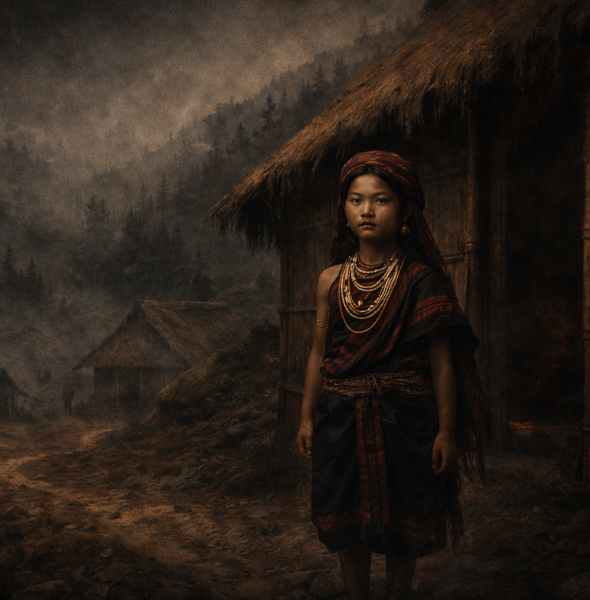
Born in 1915 in Nungkao village, Manipur, she belonged to the Zeliangrong Naga community tribal.

Childhood
Her childhood was shaped by indigenous traditions, spiritual teachings, village life, and early resistance

Family Background
She was born into a devout tribal family that valued faith, culture, discipline, and unity.
Indigenous Foundations
Socio-Cultural Environment
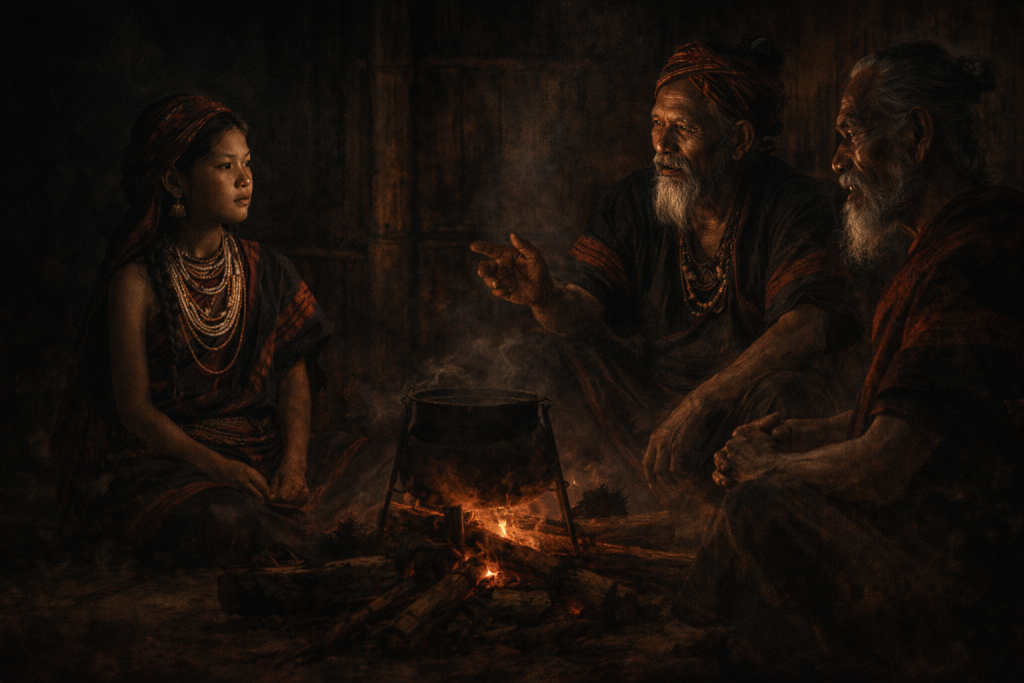
The Zeliangrong community, comprising Zeme, Liangmai, and Rongmei tribes, nurtured a deeply rooted socio-cultural environment shaped by nature, spirituality, and collective identity. Life revolved around village communities, forest-based livelihoods, and strong kinship systems that emphasized unity and mutual responsibility. Indigenous faith practices guided moral values, rituals, and social order, long before external religious or colonial influences arrived. Oral traditions, folk songs, and community festivals preserved history and reinforced cultural continuity. Respect for elders, courage in adversity, and devotion to ancestral customs were central to daily life. This environment fostered resilience and self-reliance, shaping leaders like Rani Gaidinliu, whose worldview emerged from these traditions. The Zeliangrong socio-cultural fabric thus became a foundation for resistance, spiritual reform, and the preservation of indigenous identity.
The Zeliangrong community, comprising Zeme, Liangmai, and Rongmei tribes, lived within a deeply connected socio cultural system shaped by forests, hills, and spirituality. Village life emphasized collective responsibility, kinship bonds, and respect for elders. Indigenous faith guided rituals, seasonal festivals, moral conduct, and social harmony. Oral traditions, folk songs, and storytelling preserved history, values, and identity across generations.
This environment nurtured resilience, self reliance, and cultural pride among the people, preparing them to withstand external pressures and colonial disruption. Daily life reinforced courage, discipline, and unity through shared labor and spiritual practice. Growing within this setting, leaders like Rani Gaidinliu absorbed values that later shaped resistance, reform, and unwavering commitment to indigenous identity and cultural continuity.
Formative Forces
Early Influences
Rani Gaidinliu’s spirit was shaped early by the powerful blend of indigenous faith, community discipline, and resistance narratives within the Zeliangrong society. Spiritual teachings emphasized moral strength, self-control, and devotion to ancestral traditions, instilling a deep sense of purpose. Stories of colonial oppression and local uprisings circulated through oral traditions, awakening her awareness of injustice. Village elders and spiritual leaders played a crucial role in guiding her worldview, reinforcing courage and cultural pride. Daily exposure to collective village life taught resilience, sacrifice, and responsibility from a young age. These early influences forged her inner strength, preparing her to emerge as a fearless leader who united spirituality with resistance in the struggle against colonial rule.